
How to build brand trust while building your product
For startups, trust starts forming long before a product has a proven track record. Clear communication, transparency and credible evidence can help reduce uncertainty, but ultimately, trust is built when the product delivers on the promises being made.

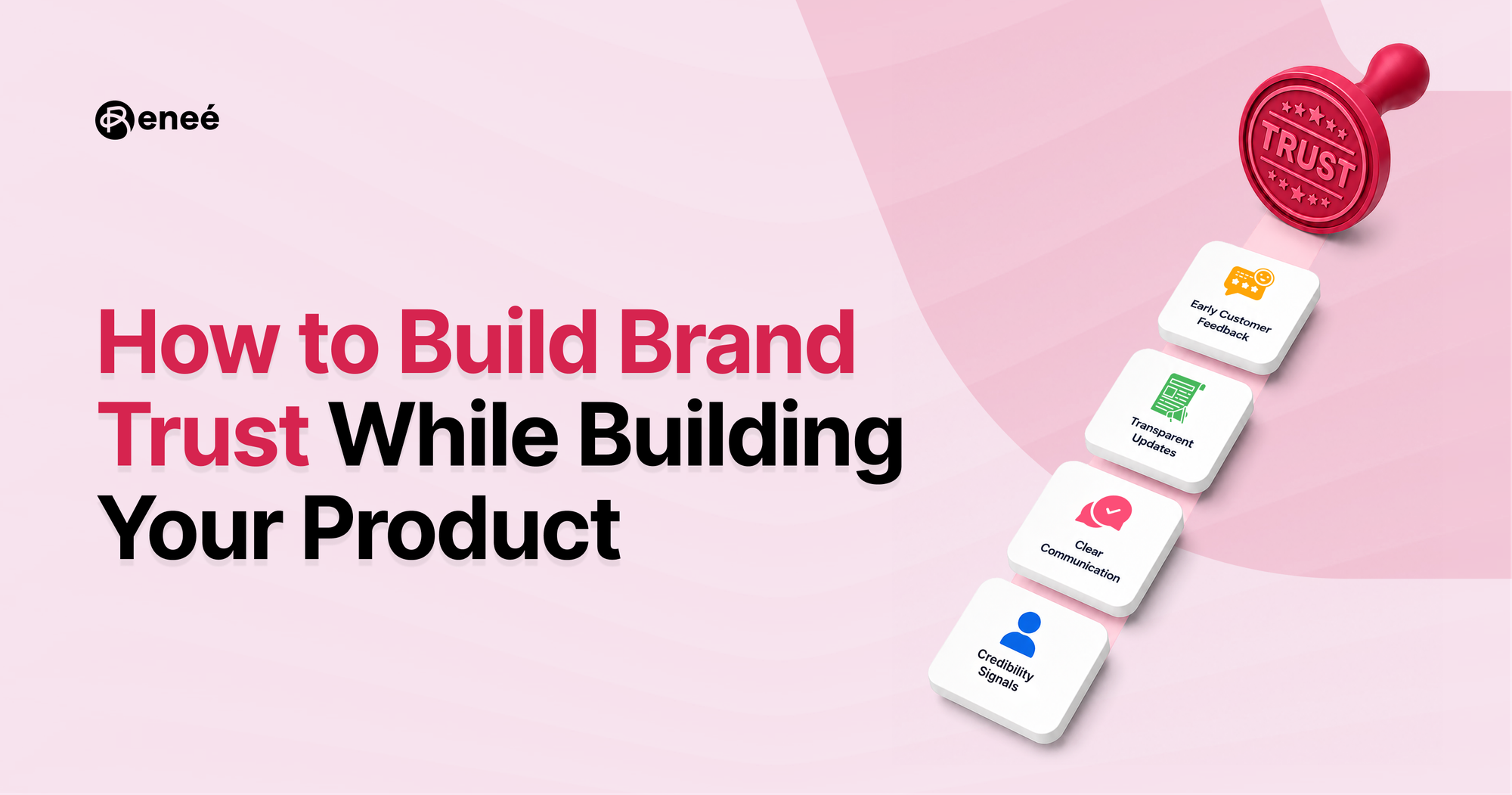
A startup ideally begins communicating before it has a track record. Before a product has had a chance to prove itself, customers, investors, employees, and potential partners are already forming opinions about the people building it and the problem they are trying to solve.
They are assessing the founders, how well they understand the problem being solved, what the company chooses to disclose, and whether its claims hold together. In African markets, where trust shapes people's willingness to try unfamiliar digital services, those early impressions matter.
A 2020 McKinsey report found that 67% of banked Nigerian consumers trusted their banks more than fintechs. It identified transparency, customer education, and ease of withdrawal as factors that could strengthen confidence in fintech services.
Similarly, a 2023 GSMA research study across six African markets found that 48% of surveyed MSMEs identified customer distrust of e-commerce marketplaces as a challenge to business growth.
Trust, then, is not something a startup can leave until after product-market fit. It starts forming while the company is being built, and sometimes before.
With little traction, investors assess people
Pre-seed investing offers a useful example of how people make decisions when there is little evidence to work with.
At that stage, a startup may have limited customer data, revenue or product history for an investor to assess. So investors have to make judgements based on what is available: the founders, their understanding of the problem, the market they are entering and whatever early evidence they can provide.
A TechCrunch analysis of African pre-seed investing in 2020 found that founder credibility and trust between founders and VCs played a role in early rounds. Experienced founders were often able to command larger valuations because their previous experience gave investors greater confidence in their understanding of the problems they were tackling.
FirstCheck Africa offers a more direct example of this approach. The fund considers investments as early as the idea stage, and at both pre-seed and seed, the founder and co-founding team is its most critical factor.
That does not mean simply taking founders at their word. Their experience, knowledge of the problem, and ability to communicate how they intend to solve it become part of the evidence an investor can assess.
This is where early communication matters. A founder who can explain a problem precisely gives investors something to evaluate. A company that is clear about what it knows, what it is testing, and what it has yet to prove gives people a more reliable basis for making a judgement.
The same principle applies beyond investors. An early employee deciding whether to join a company, a partner considering a relationship, or a customer deciding whether to try an unfamiliar service may all have limited evidence to draw on. In the absence of a long track record, they look for signals.
Communication becomes part of the evidence
Communication is no substitute for proof. A strong narrative cannot make a poor product trustworthy. But communication can determine how much useful information people have as they decide whether to take the first step.
That makes some communication choices more consequential than they might appear. Can the company explain exactly who has the problem and what is broken? Can the founders distinguish between what they know and what they still need to prove? Is the company clear about its pricing, limitations and uncertainties? Who else is willing to put their name behind it?
Specificity, transparency, and credible third-party validation give people more information on which to base their decisions.
To be clear, none of these signals proves that a startup will succeed. What they can do is reduce some of the uncertainty that a potential customer, investor, employee, or partner must accept before deciding to engage with an unfamiliar company.
For a startup jostling for attention in a crowded market, that distinction matters. Communication should give people something credible to evaluate rather than asking them to believe a promise simply because it has been repeated often enough.
The product proves the story
Eventually, however, communication has to give way to experience.
A customer who was persuaded to try a payment service now finds out whether payments actually go through. A business that signed up for an e-commerce platform discovers how disputes are handled. A user who handed over personal information learns whether the company treats that information with the care it promised. This is where communicated trust starts becoming earned trust.
McKinsey's findings on Nigerian fintechs are useful here because several of the factors associated with trust are things customers experience directly. Pricing transparency, customer education and ease of withdrawal cannot simply be communicated. They have to be delivered.
The implication for communications is straightforward. The story a company tells should be consistent with the experience it delivers. If a startup presents itself as transparent but hides fees, its communication becomes evidence against it. If it promises reliability but leaves customers without answers when something fails, the damage extends beyond that individual service failure. The experience has contradicted what the company said about itself.
This is why trust cannot simply be handed over to the communications team once the product is finished. Communication starts setting expectations much earlier. The product then tests whether those expectations were justified.
Trust accumulates
A startup rarely earns trust through a single announcement, piece of media coverage or successful transaction. It builds through repeated evidence that what the company says is consistent with what it does.
For startups, this makes every early interaction consequential. A clear explanation of the problem, an honest disclosure about what the product can and cannot do, and a product that performs as promised, all contribute to the same judgement: can this company be trusted?
A startup does not need to have proven everything before it starts communicating. But it should recognise that people are already making judgements long before the product has a substantial track record.
The task in those early stages is not to manufacture trust that has not yet been earned. It is to give people enough credible information to make an informed first decision, and to ensure the product experience gives them a reason to make the next one.